
Top gainers among the S&P BSE Sensex include GAIL, Dr Reddy's Laboratories and Bharti Airtel, all edging up by 1% in late morning deals
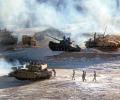
There was no visible forward movement in disengagement of troops in the remaining friction points as the Chinese side did not show flexibility in their approach on it at the 11th round of military talks.

The country has already laid down a 'red carpet' for businesses.

Markets ended in green on rate cut hope.

'This novel format of diplomacy -- the informal summit -- will not only facilitate bilateral communication and reduce miscalculations at the very top level of the two governments, but possibly open the space for China and India to speak in one voice on various issues of mutual concern,' note Feng Renjie and Ding Kun Lei

SoftBank Group-backed Ola Electric is in talks with multiple global suppliers to build a battery cell manufacturing plant in India with a capacity of up to 50-gigawatt hours, sources said. As part of its broader electrification push, the firm plans to invest in companies with advanced cell and battery technology, alongside the 50 Gwh battery plant. Ola Electric needs 40 Gwh of battery capacity to power 10 million electric scooters annually. The remainder will be for its electric cars, which the company plans to manufacture in the future.

Chinese Foreign Minister Wang Yi arrived in India Thursday evening in the highest-level visit between the two countries after the ties came under severe strain following the eastern Ladakh standoff nearly two years ago.

'The big power struggle in faraway Europe erupted at a most critical juncture when India has been increasingly sceptical about American policies and statesmanship,' argues Ambassador M K Bhadrakumar.

This project is part of $46 billion China-Pakistan Economic Corridor (CPEC) package and is covered under the CPEC Framework Agreement.
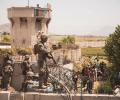
Like China, India too should connect the dots and move ahead with a long-term perspective in Afghanistan, advises Ambassador M K Bhadrakumar.

India's exports may have touched an all-time high of $422 billion in 2021-22 but recession in key western markets and geo-political crisis due to the Russia-Ukraine war are expected to impact the growth of the country's outbound shipments in 2023. All the global trade promoting factors like political stability, movement of goods, adequate availability of containers and shipping lines, demand, stable currency and smooth banking systems are in disarray. Adding to the woes, COVID cases have again started rising in countries like China, Japan, South Korea and the US.

Two years ago this day, Astad Deboo, dancer extraordinaire, passed into the ages. A new exhibition Breaking Boundaries remembers the pioneer who redrew the margins of Indian dance.

The transgression took place on August 30, and the Chinese troops returned from the area after spending few hours, they said.

According to information, the Chinese side conveyed to the Indian mission its keenness to have a meeting between the two defence ministers.

India's GDP growth to reach 8% by 2017. says World Bank

India has undertaken a number of structural reforms.
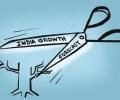
The International Monetary Fund (IMF), in its latest World Economic Outlook report, has slashed its forecast for India's FY23 gross domestic product growth to 8.2 per cent from 9 per cent, saying that higher commodity prices will weigh on private consumption and investment. This was one of the steepest cuts for emerging economies compared to the IMF's January WEO forecasts. Saying that global economic prospects have worsened significantly due to commodity price volatility and disruption of supply chains caused by the war in Europe, IMF cut its global growth outlook for calendar year 2022 to 3.6 per cent from 4.4 per cent, and said both Russia and Ukraine could experience large GDP contractions.
Global growth, according to IMF, likely to be lower at 3.3%

The mandates which Pakistan has failed include action against all United Nations-designated terrorists like Jaish-e-Mohammed chief Azhar, Lashker-e-Tayiba founder Hafiz Saeed and the outfit's operational commander Zakiur Rehman Lakhvi.

Further outperformance hinges on pickup in industrial activity, buying by local investors.

The country received $ 6bn in clean energy investment in 2013, out of a total of USD 62bn from 2006 to 2013.

'The Modi-Xi and Modi-Obama meetings, with an interval of just 12 days, are juxtaposed superbly at a crucial point in the prime minister's life. Can Modi carve out a win-win situation with the superpower and the emerging superpower at the same time?'
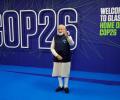
India lost around 38.5 thousand hectares of tropical forest in the last decade. Nearly 14 per cent of the country's tree cover! It is one thing for Modi to announce that India will reach a net-zero level of emissions in 2070. But if it is serious, it needs to start today, points out Ramesh Menon.

To cover most of the gap, the road ministry plans to raise $7 billion.

Recalling the Galwan incident, he said the bravery, valour and restraint shown by the Indian Army are incomparable and unparalleled.

The ecosystems of India and China today jostle against one another across Asia and much of the world.

The former Chief of Army Staff said India faces the most complex threats and challenges spanning a full spectrum of possible conflict -- from nuclear to sub-conventional -- but asserted that the armed forces are ready to deal with them.

In the first highest level face-to-face contact between the two sides after border tension erupted in eastern Ladakh in early May, Singh and Wei met for two hours and 20 minutes in Moscow on Friday evening on the sidelines of a meeting of the defence ministers of the Shanghai Cooperation Organisation.

In a major sign of transformation of manufacturing-dominated Chinese economy, annual output of its service sector may exceed that of the manufacturing sector for the first time ever in 2013, an expert said.

The papers noted that the 5G network is built on easily accessible and open Internet protocols and it inherits all the vulnerabilities of previous generations which make it vulnerable to cyber-attacks and compromising the security of the entire system.
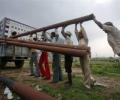
ADB, however, has cut its growth forecast for developing Asia to 6.1 per cent from the earlier 6.3 per cent in view of subdued economic activity in the US and China.
The Modi government's appalling inefficiency and lack of purpose stand exposed, says Ambassador M K Bhadrakumar.

Outlining eight "pillars" for the future of India-China relations, President Pranab Mukherjee on Wednesday underlined the need for comprehensively resolving challenges including the boundary question through "political acumen" and "civilisational wisdom".

A well-developed banking system and stock market was also a factor as it encourages the people to invest their money.

Diwesh Sharan, a deputy director general of ADB, says beside the PPP model and viability gap funding, there is a 3rd option - value capture - to raise funds for India's ambitious infrastructure projects.

'I want to assure this House that in these talks we have not conceded anything.' Full text of what Defence Minister Rajnath Singh told Parliament on the Chinese pullback in eastern Ladakh.

Tata Steel was the top gainer in the Sensex pack, zooming 7.57 per cent, followed by Sun Pharma, IndusInd Bank, L&T, ITC and HCL Tech.
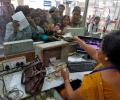
New Development Bank plans to issue $300-500 mn worth masala bonds in rupee: K V Kamath.

The Taliban knows that Washington holds the key, points out Ambassador M K Bhadrakumar.

Only a few thousand chargers dot the Indian landscape, some in working condition, others not, with some held hostage to the power supply vagaries of local utilities, reports S Dinakar.
